
Heads up: this issue is from September 30, 2025. Because it covers time-sensitive coding and regulatory topics, some details may have changed since. See the latest issues for current guidance.
While my friends out there know a little about my politics, this article is not a commentary. There are so many things going on right now, I decided to bundle them all into one article. You can also pick and choose which topics interest you the most and ignore the rest. Actually, most of these should be important to most of my readers. A lot is coming down the pike.
Here are the highlights of what's currently happening.
Shutdown
We currently do not have any agreement on a Continuing Resolution. This means that the government could shut down at Midnight on October 1. Last Friday, the House proposed a short CR that would keep everything open until November 21. The Senate summarily defeated it as negotiations rolled along. Democrats have put forward an alternative that would extend funding through October 31 and add more than $1 trillion to extend Obamacare ("ACA") subsidies that are set to expire at the end of the year and roll back Medicaid and other health program cuts that Republicans included in their marquee tax cut and domestic policy law enacted over the summer. G.O.P. leaders have flatly ruled out those changes. Anyway, for those of you who have not experienced a shutdown, Medicare bills are paid as an exception, as are Social Security benefits. However, delays can occur if contributing departments are halted.
The OBBBA (One Blah Blah Blah Bill) is the key factor in potential Medicare sequestration. While a rise in the federal deficit does not automatically trigger sequestration, the rules and acts, statutes, particularly the BAC and Statutory PAYGO, can. Understanding the pivotal role of the OBBBA in this process is crucial for a comprehensive grasp of Medicare sequestration.
Currently, as you may know, the Medicare portion of Medicare payments is now reduced by 2%. This is due to sequestration resulting from spending increases that exceed a Congressional limit, known as PAYGO. The Big Bodacious Budgetary Bombshell has plunged the country into trillions of dollars in debt, so, again, sequestration can increase to 4%. Without enactment of subsequent legislation that would offset the deficit increase, waive the recordation of the bill’s effects on the deficit, or otherwise mitigate or eliminate the statutory requirements, OMB will be required to issue a sequestration order not more than 14 days after the end of the current session of Congress (excluding weekends and holidays). Sequestration has been exempted from Medicare payments in the past. Let's see what happens before 2026.
Telehealth
Heads up, everybody!! If no CR is passed, or if it is and there is no extension of the current Medicare waivers for telehealth, Medicare will revert to the pre-pandemic era of telehealth tomorrow. This means patients must be in rural areas and must be in a doctor's office or other facility. In other words, the patient may not be at HOME. There are exceptions for substance abuse and behavioral health. Please determine how to address this, as we are accustomed to offering this alternative to patients.
Direct to Consumer
Robert Kennedy, who would not win a popularity contest with most of the medical community, does not like TV advertising of pharmaceuticals. To wit, the White House issued a memorandum on September 9, 2025 directing the secretary of the US Department of Health and Human Services (HHS) and the commissioner of the US Food and Drug Administration (FDA) to significantly increase its enforcement of the Federal Food, Drug, and Cosmetics Act (FFDCA) and its rules governing direct-to-consumer (DTC) prescription drug advertising. This initiative heralds a new era of regulatory scrutiny of drug advertising practices, although the full scope and long-term impact of this initiative remain a bit fuzzy. However, on September 9, 2025, the FDA and HHS dropped a follow-up bombshell: they issued approximately 100 cease-and-desist letters and thousands of letters to industry targeting direct-to-consumer (DTC) drug ads. A key focal point is the FDA’s intent to revise or eliminate the “adequate provision” pathway, a regulatory approach in place since 1997 that allows broadcast ads to meet fair balance standards by combining a major statement of key risks with directions for accessing full prescribing information (e.g., a website, toll-free number, or print insert). Rather than attempt a direct prohibition, the FDA seems to be choosing a different path: tightening advertising standards to the point where specific formats, especially short broadcast spots, may become impractical given the volume of risk information that would need to be disclosed. More enforcement may be coming, and companies should proactively reassess their DTC materials. I'll just be happy if Cologuard stops advertising during my dinner.
The RUC/CPT
For years, I have wanted CPT to be in the public domain, like ICD-10-CM and HCPCS. This isn't that, unfortunately. The American Medical Association (AMA), its Current Procedural Terminology (CPT) codes, and its Relative Value Scale Update Committee (RUC) are losing power over Medicare service prices. The Centers for Medicare & Medicaid Services (CMS) is reducing its reliance on the RUC's recommendations and developing alternative methodologies to set physician payment rates. The outcome of this is more differences in procedural coding, Medicare allowables, and, as in recent years, we will see a lot of those G-codes.
Catastrophic ACA Plans
The name of these plans is totally appropriate. The agency that oversees the ACA announced early this month that it would expand eligibility for “catastrophic” plans sold in Affordable Care Act online marketplaces. The plans require individuals to spend more than $10,000 per year on deductibles before the policies cover most medical costs. They then carry lower monthly premiums than other Obamacare policies. There are hardship exceptions for the out-of-pocket, but this is still awful and who knows what the coverage will be. The move reflects growing concern among Republicans about political backlash if Congress doesn’t extend larger tax credits put in place during the Covid-19 public health emergency to help consumers pay their premiums. The extra subsidies are set to expire at the end of the year, resulting up to a 75% increase in the amount people pay for coverage, according to KFF, a health information nonprofit that I would be lost without. Expect more uninsured patients.
Drug Pricing
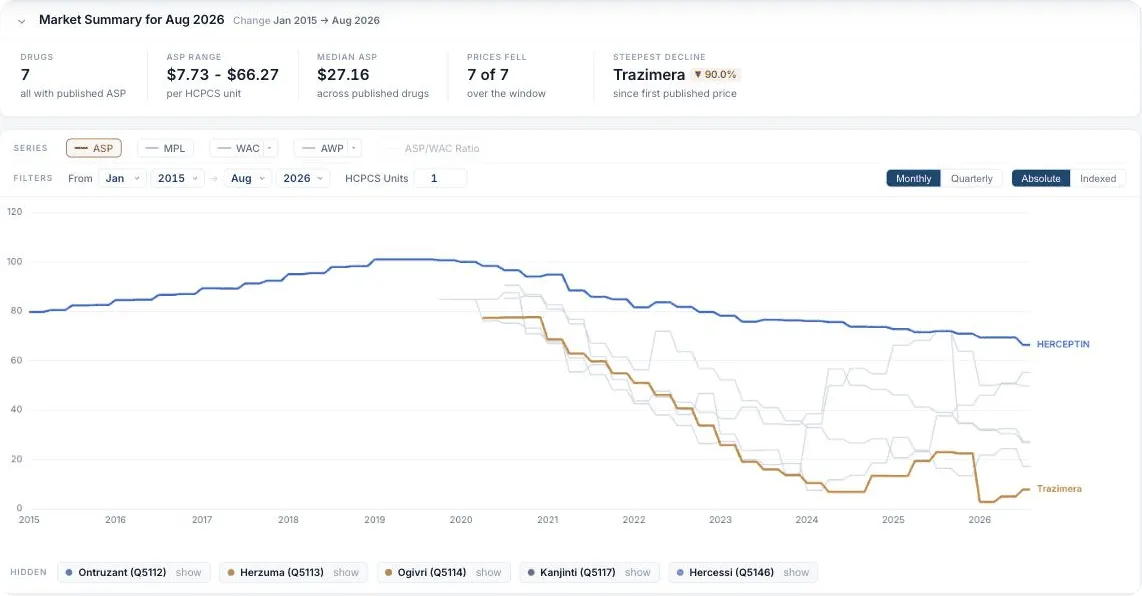
This situation is really confusing. As you know, Biden started negotiating for Part D drugs a couple of years ago. This negotiated price was called the Maximum Fair Price ("MFP"). That pricing still stands for selected prescription drugs and could be negotiated for Part B drugs starting next year. Following Executive orders in April and January, on May 12, President Trump signed an executive order titled “Delivering Most-Favored-Nation Prescription Drug Pricing to American Patients,” directing the administration to take actions to compel drug manufacturers to lower prices based on charges in other developed countries. The order directs the Department of Health and Human Services (HHS) to establish a most-favored-nation ("MFN") price target that would apply to the prices charged to the Medicare and Medicaid programs. HHS communicated MFN price targets to drug manufacturers in May, clarifying that reference prices were generated for all branded drugs or biologics that have no generic or biosimilar competition. HHS will also facilitate direct-to-consumer (DTC) purchasing programs that allow drug manufacturers to sell products at the MFN price target to individuals or businesses. The executive order directs HHS to take action against drug manufacturers that fail to voluntarily make MFN prices available to government health programs. This week, the Trump administration sent letters to 17 manufacturers outlining steps they should take to make the MFN price available to consumers.Manufacturers are expected to take the following steps within the next 60 days. The president promised manufacturers that, if they do not voluntarily lower drug prices by September 29, “we will deploy every tool in our arsenal to protect American families from continued abusive drug pricing practices.” The executive order pointed to actions the administration may take, including HHS rulemaking to impose MFN price targets, expanding the FDA’s wholesale drug importation program, pursuing enforcement actions against anti-competitive practices, modifying or revoking drug approvals, and levying retaliatory tariffs. Whether this will actually happen is up in the air. First, all Medicare payment changes should go through Congress. This is part of the Medicare statutes. Unfortunately, this Administration is no stranger to violating statutes and laws. Stakeholders in the drug manufacturing industry will likely challenge the MFN in court as they have with MFP. Regardless, we will be dealing with lots of MFs. BREAKING: STAT is reporting that there is the first company to sign up for MFN. STAY TUNED.